The Lab of the Future, Built Today.
At Ursa, we are redefining the laboratory experience through intelligent, connected instrumentation. Our core MIK technology powers the Mars platform—a unified ecosystem designed to evolve alongside your research.
Founded by scientists and engineers in Santa Fe, New Mexico, Ursa was born from a shared frustration: the realization that innovation is inhibited by the very tools meant to enable it. For too long, research has been weighed down by rigid, overpriced, and siloed “black box” systems that refuse to adapt. We designed a better way and built a platform that scales with your ambition, rather than limiting it.
In fact, the only thing we have in common with the old guard is that our box is actually black.


Reinventing the instrument: the MIK platform
Our technology is driven by MIK—a radical departure from conventional lab hardware. MIK eliminates the compromise between flexibility and performance, or automation and affordability.
Featuring swappable, drop-in modules, MIK gives you the power to design, control, and scale experiments in real-time. Guided by multi-modal AI and our unified software platform, the system is designed to be as dynamic as your research. From microbial culture to chemical processing, MIK adapts to your needs—not the other way around.
Closing the Gap Between Silicon and Science
We are witnessing the most consequential breakthrough of the decade: the AI-driven paradigm shift in discovery. While sophisticated Large Language Models and AI teams are now generating potential candidates at unprecedented speeds, the physical environment is struggling to keep pace.
Ursa provides the autonomous bridge between computation and validation. Our platform is engineered to match the velocity of AI, ensuring that the physical testing of candidates is no longer the bottleneck. By synchronizing the computational power of the world’s best AI with Ursa’s intelligent instrumentation, we turn digital potential into physical reality.

From Discovery to Production
Science is more than fundamental discovery—it is the catalyst for production through biomanufacturing. At Ursa, we believe the point of consumption should also be the point of production. We are building the tools to bring the laboratory wherever humanity goes: across land, maritime frontiers, and into deep space.
By creating intelligent, resilient infrastructure, we aren’t just making discovery possible here on Earth—we are engineering the foundation for remote habitats. Whether in a terrestrial lab or a lunar outpost, Ursa ensures that the power of biology is always within reach.
TEAM
Our company is led by a unique partnership that combines deep scientific innovation with extensive product development expertise.
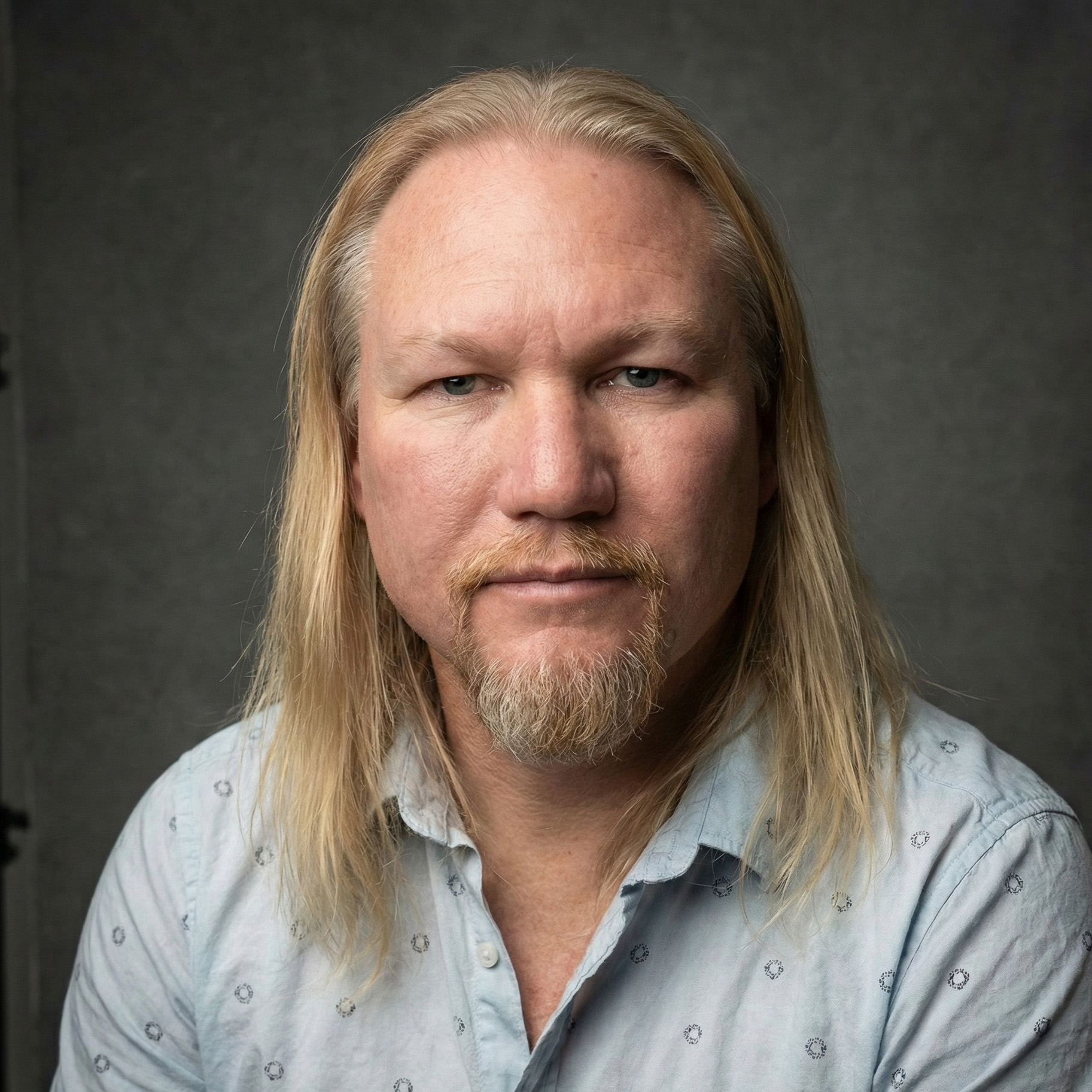
BEN F. LUCKER, PHD, PMP
CEO, CO-Founder
Ben is the CEO and Co-Founder of Ursa Science, where he directs the architectural vision for the world’s first software-defined laboratory platform. A multidisciplinary scientist and Certified Project Manager (PMP), Ben has authored over 20 peer-reviewed publications and patents at the intersection of microbial cultivation, photophysiology, and spectroscopic analysis.
Ben’s career is dedicated to solving the instrumentation gap in physical science. He architected the Environmental Photobioreactor (ePBR)—a system that became an industry standard by synchronizing complex environmental variables with real-time physiological data. At Ursa, he translates this expertise in hardware-software integration into the Mars modular robotic system and the Deterministic Control Kernel. His work ensures that physical experiments are no longer manual, person-dependent events, but are instead auditable, versioned, and software-defined.
With extensive experience as a CSO, Founder, and Research Director, Ben applies a systems engineering lens to the lab environment. He views the challenge of modern research as a data-fidelity problem, where the goal is to convert stochastic physical processes into predictable digital twins. Under Ben’s leadership, Ursa Science is building the control plane for the next century of science, making laboratory discovery proactive, explainable, and compounding.

Christopher W. Delaurentis
CTO, CO-Founder
Chris is the CTO and Co-Founder of Ursa Science, where he architects the computational control plane that powers the world’s first software-defined laboratory. A multidisciplinary technologist with over 25 years of leadership in product innovation, Chris specializes in the development of high-availability platforms and distributed systems that bridge the gap between digital logic and physical execution.
His expertise spans the entire technical stack—from embedded systems and microcontrollers that govern modular robotics to the API-first architectures required for cloud-based lab management. Having led engineering teams across Financial Services, Telecommunications, and Immersive Media, Chris brings a unique perspective on system reliability and deterministic performance to the life sciences. At Ursa, he is the primary architect of the Control Kernel, ensuring that every robotic movement and sensor reading is logged, auditable, and repeatable at scale.
Chris views the laboratory as a complex data environment where software must act as the ultimate source of truth. By integrating real-time hardware control with AI-driven insights (Mik), he has transformed the “manual lab” into a versioned, programmable artifact. His career is defined by building robust, industrial-grade solutions that enable Ursa’s partners to treat physical science with the same precision and agility as modern software engineering.
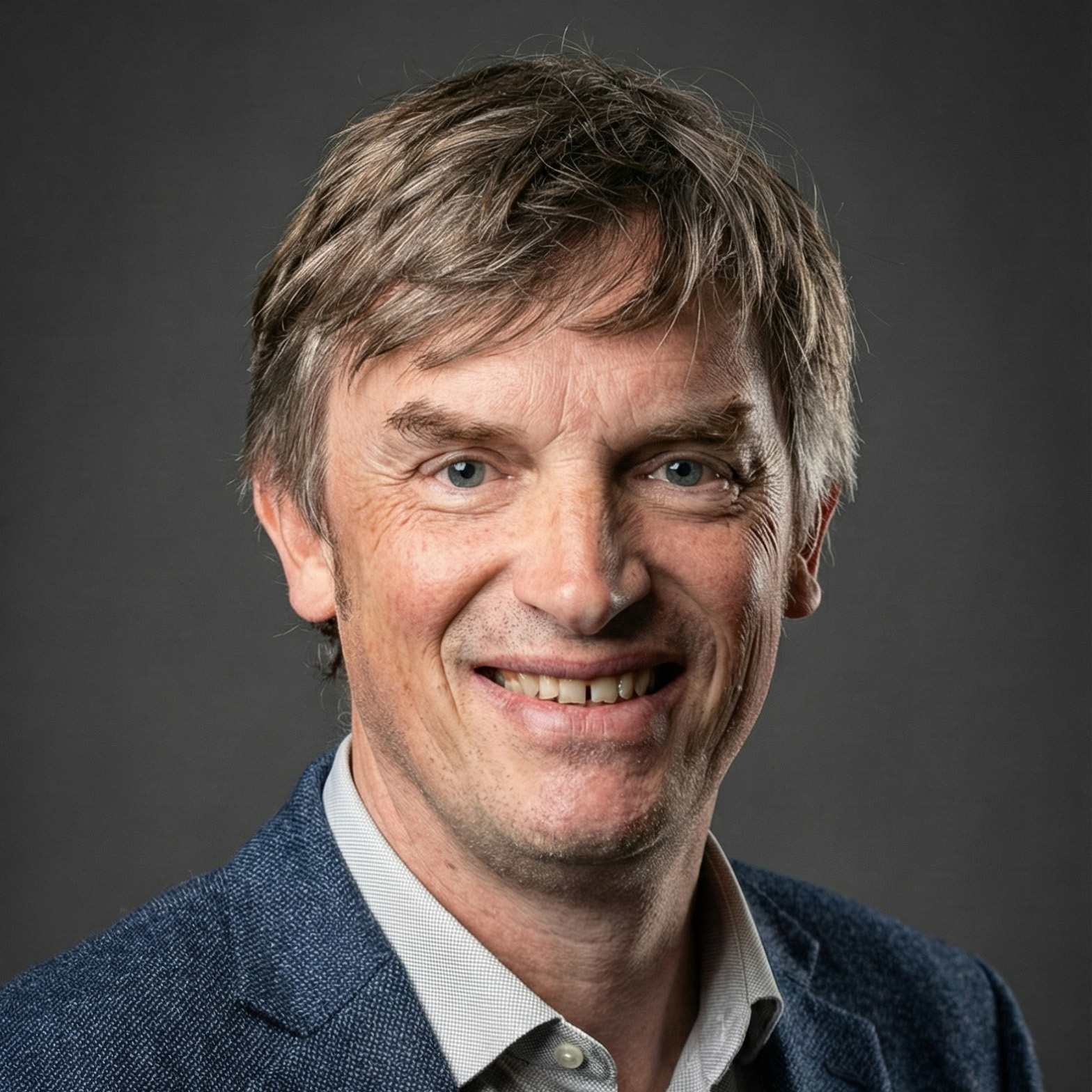
CLAY TEETER
SOFTWARE ENGINEER
Clay is a Physicist and Systems Architect who builds the software that connects AI with lab equipment at Ursa Science. He specializes in reliable systems that turn scientific data into instructions robots can follow.
At Ursa, Clay is the primary architect of Mik, the platform’s AI agent. His work focuses on connecting people and ML models to hardware firmware—so researchers can ask Mik to run tasks, while the system spots equipment problems before they happen and keeps workflows running smoothly. Using his physics background to design systems, Clay ensures that Ursa’s AI doesn’t just suggest experiments, but understands the underlying physical laws of the instruments it controls.
A former DOE Innovation Fellow and founder of impact-driven platforms like Maalka, Clay brings deep technical experience to the Ursa leadership team. He treats the lab as a physics problem—using software to make experiments more predictable and repeatable. Whether he’s working out formulas from experimental data or building pipelines from cloud to firmware, Clay’s focus is on making research more reliable and scalable.

DaKOTA WARD
EMBEDDED SYSTEMS ENGINEER
Dakota is an Embedded Systems Engineer specializing in firmware architecture, hardware integration, and manufacturing. With nearly a decade of hands-on experience, he has delivered machine vision inspection systems to Fortune 500 production lines, built the hardware test infrastructure behind a consumer product launched at scale, and led embedded firmware development across scientific and IoT platforms.
His experience gives him a practical understanding of what it takes to move a hardware system from early concept to a shippable product. He views embedded systems as the layer where hardware ambition and manufacturing reality have to meet.
At Ursa, Dakota serves as our embedded systems lead, owning the firmware and hardware systems that the platform is built on. His experience will be central to our scale-up strategy, helping the team design with manufacturing in mind and execute a smooth transition from prototype to production.

John D. Tran, PHD
Chief Business Officer
John serves as the Chief Business Officer at Ursa Science, where he leads the commercialization and strategic deployment of the world’s first software-defined laboratory platform. A Molecular Biologist and Biochemist by training, John’s technical foundation was forged in the high-stakes field of CRISPR-mediated plant engineering. His early research focused on the precision modification of cell-wall lignocellulosic architecture—a domain where technical success is measured by the brutal intersection of molecular recalcitrance and industrial unit economics.
At Ursa, John partners with the founding team to bridge the gap between breakthrough laboratory science and scalable industrialization. He focuses on the market integration of Ursa’s core architecture: the Mars modular robotics, the Deterministic Control Kernel, and the Mik AI agent. By treating laboratory experiments as software-defined, versioned artifacts, John helps Ursa’s partners eliminate the fragility of manual workflows and replace it with predictable, programmable science.
Drawing on his background as a former founder and deep-tech venture investor, John brings a first-principles approach to building Ursa’s commercial ecosystem. He specializes in helping technical organizations translate a Proof-of-Concept into a Scalable Industrial Platform, ensuring that institutional knowledge becomes a persistent, compounding asset. For John, the future of deep tech isn’t just about better hardware; it’s about creating a deterministic control plane where the physical and biological laws of science are encoded into the software itself.
Discover The Future
Ursa Science is creating a world where labs are no longer locked into yesterday’s tools. Whether you’re an innovator in the lab or a visionary partner looking to shape the future of science, we invite you to build with us. The future of instrumentation isn’t in the box. It’s modular, intelligent-and already here.